Electrolytic oxidation of aluminum.
GS Process (Sulfuric Acid Anodizing / SAA)
Aluminum is one of the most reactive metals and forms a natural oxide layer when exposed to oxygen in the air. Exposure to acidic or alkaline substances causes this protective layer to break down, leaving the base material vulnerable to chemical attack. To improve durability, the oxide layer can be artificially strengthened through anodic oxidation. This simultaneously increases the hardness, the associated wear resistance, and the electrical resistance of the surface. Thanks to the incorporation of dyes, anodized layers can be enhanced both electrolytically and through adsorption.
Technical Surfaces
- colorless and black
- Dimensions: 2000 x 1500 x 600 mm
- Weight: 350 kg
Decorative Surfaces
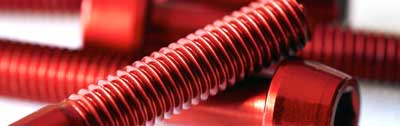
- gold, yellow, orange, red, green, blue, gray, olive, purple
- Dimensions: 500 x 500 x 700 mm
- Weight: 50 kg
- By appointment and with advance notice: violet
Our Services
- complete / partial
- Compress / Do not compress
- Technical finish / Decorative finish
- Forging Alloys / Casting Alloys (Link to List of Metal Alloys)
- Layer thicknesses from 5 to 25 µm (link to image of layer growth)
Standards & Guidelines
- LN 9368-2000 . + Letter indicating coating thickness (colorless/natural anodizing)
- LN 9368-2001 . + Letter indicating coating thickness (colorless/natural anodizing)
- LN 9368-2002 . + Letter indicating coating thickness (colored anodizing)
- 3 µm < 6 µm = .1
- 5 µm < 9 µm = .2
- 9µm < 12 µm = .3
- 12µm < 15 µm = .4
- 15µm < 18 µm = .5
- 18µm < 24 µm = .6
- DIN 17611 E0 or E6, Class 5–25
- ISO 7599 + Class AA5 – AA25
- MIL-A-8625 F Type II Class 1 or Class 2
- DIN EN 2284 Type A = uncompacted / B = compacted / C = dyed
- 80-T-35-2000 = Sulfuric acid anodizing
- 80-T-35-2001 = Compaction of Anodized Surfaces
- 80-T-35-2002 = Coloring of Anodized Surfaces
- A6-SP-1000000-X-0003-MTA_1_4 Process Specification for Anodizing